Banksy’s Happy Shopper, exhibited in 2009 at the Banksy vs. Bristol Museum show, is a humorous yet deeply critical work that showcases the artist’s mastery in creating unexpected combinations. Prominently displayed in the museum’s main entrance hall, this piece stood out in an exhibition where Banksy turned the museum space into a playground, subverting traditional notions of art. By incorporating counterfeit historical artifacts into Bristol’s permanent collection, Banksy aimed to blur the lines between reality and fiction, offering a fun experience akin to navigating a tangible version of Wikipedia. In this context, Happy Shopper emerges as both a humorous intervention and a profound social critique.
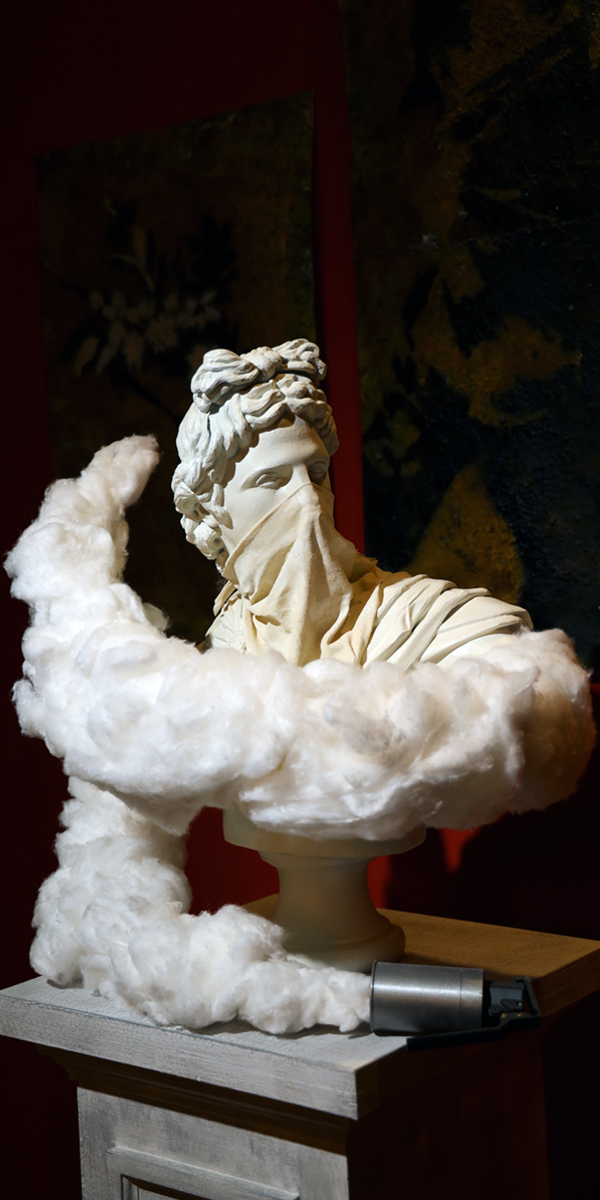
Happy Shopper is an installation where Banksy reinterprets a traditional museum statue. The piece draws inspiration from a classic museum sculpture; such statues typically represent serious historical figures, reflecting the solemnity and aesthetic values of the past. However, Banksy transforms this figure with humor: he adorns the statue’s arms with shopping bags and places large, exaggerated sunglasses on its face. Stripped of its old-fashioned drapery, the figure is reimagined to resemble a contemporary pop culture icon—perhaps someone like Paris Hilton or Victoria Beckham. Through this intervention, Banksy disrupts the seriousness of traditional art, turning the museum space into a platform for critique. The physical presence of the piece may amuse museum visitors at first glance, but its underlying message sparks serious reflection.
Happy Shopper is a work where Banksy uses humor to critique consumer society and popular culture. The numerous shopping bags on the statue’s arms symbolize modern humanity’s insatiable desire for material goods. These bags represent the excesses of consumer culture and the tendency of individuals to define their identities through the things they own. The oversized sunglasses placed on the statue’s face reflect the superficiality and obsession with appearances in popular culture; these glasses highlight contemporary society’s fixation on “being seen” and “looking good.” The statue’s expressionless face, despite this frenzy of consumption, conveys an inner dissatisfaction and weariness—a way for Banksy to suggest that even amidst material abundance, modern humans experience a spiritual void.
The statue’s resemblance to pop culture icons like Paris Hilton or Victoria Beckham is no coincidence; these figures were symbols of consumer culture and popular media in the early 2000s. Through this comparison, Banksy questions how modern society’s consumption habits intertwine with pop culture and how individuals shape their identities through this culture.
Happy Shopper was exhibited as part of the Banksy vs. Bristol Museum show at the Bristol Museum in 2009. This exhibition may hold special significance for the artist, as Bristol is thought to be his hometown. Banksy upended the museum’s traditional structure in this show, placing his provocative works among classic art pieces, surprising and entertaining visitors. In this context, Happy Shopper is part of Banksy’s effort to transform the museum space into a platform for critique.
The visual simplicity and humorous tone of the piece entertain viewers at first glance, but this humor is paired with deep critique. By transforming a traditional museum statue with symbols of popular culture, Banksy disrupts the seriousness of art and invites viewers to question the aesthetic norms they’re accustomed to.